Overview
Understanding High Speed Tablet Press Machines
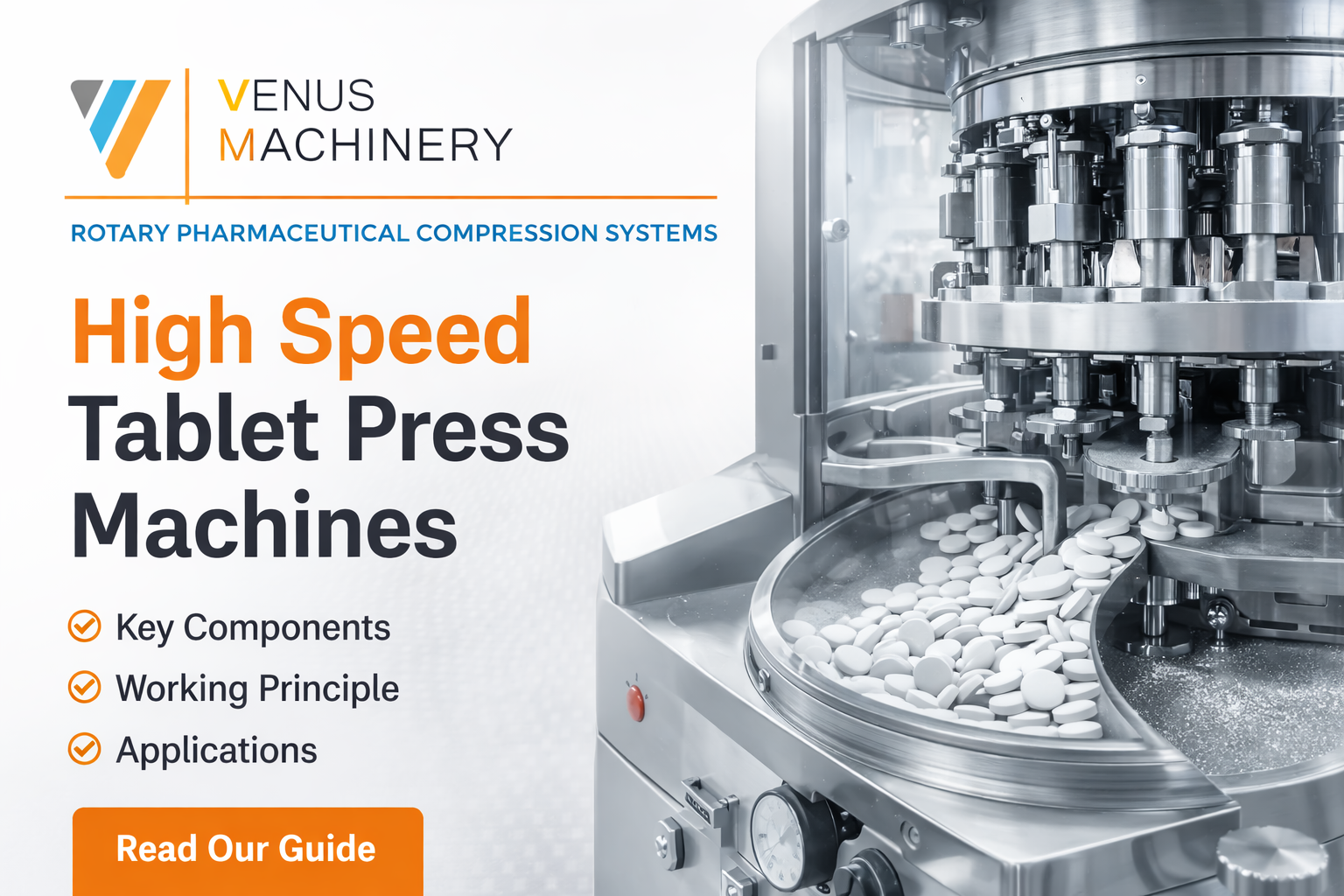
A high speed tablet press machine is a specialized pharmaceutical manufacturing system used to compress powder or granules into tablets using a rotating turret mechanism. The turret holds multiple punches and dies that rotate continuously during the production process. As the turret rotates, material is fed into the die cavity, compressed under controlled pressure, and then ejected as finished tablets.
The design of rotary tablet press machines allows multiple tablets to be produced simultaneously during each rotation. This significantly improves manufacturing efficiency compared to single-station compression machines. The compression process must be carefully controlled to ensure that each tablet meets the required pharmaceutical standards for weight, hardness, and uniformity.
High speed tablet press machines are particularly suitable for large batch production where continuous operation and consistent tablet quality are essential. Their advanced mechanical design and precise control systems enable pharmaceutical manufacturers to maintain reliable production output while minimizing variations in tablet characteristics.
How It Works
Working Principle of a High Speed Rotary Tablet Press
The operation of a high speed tablet press machine follows a systematic compression cycle that converts granulated material into solid tablets through mechanical pressure. The entire process is automated to maintain consistent compression conditions and production efficiency.
The typical compression process includes the following stages:
- Powder or granules are fed into the machine through a force feeding system.
- The material is accurately filled into die cavities mounted on the rotating turret.
- Upper and lower punches compress the material under controlled pressure to form tablets.
- Pre-compression may be applied to remove trapped air before final compression.
- The compressed tablet is then ejected from the die and discharged through the tablet outlet system.
This continuous compression cycle allows rotary tablet press machines to produce a large number of tablets during each turret rotation while maintaining dimensional accuracy and structural integrity.
Machine Anatomy
Key Components of a High Speed Tablet Press Machine
A modern high speed tablet press machine consists of several mechanical and electrical components that work together to ensure reliable tablet compression. Each component plays a vital role in maintaining consistent production output and tablet quality.
Turret System
The turret is the central rotating component of the machine that holds the punches and dies. As the turret rotates, it carries out the filling, compression, and ejection stages of tablet production.
Punch and Die Tooling
Punches and dies determine the final shape, size, and thickness of the tablet. Different tooling configurations can be used depending on the type of tablet being manufactured.
Force Feeding System
The feeding mechanism ensures that powder or granulated material is evenly distributed into the die cavities. A consistent feed system is essential to maintain uniform tablet weight.
Compression Rollers
Compression rollers apply the required pressure to compress the material into tablets. Many machines include both pre-compression and main compression rollers to improve tablet consistency.
Drive System
The drive motor powers the rotation of the turret and controls the speed of the compression process. Variable speed drives allow operators to adjust machine speed according to production requirements.
Control System
Modern machines may include PLC-based control systems with touchscreen interfaces that allow operators to monitor machine parameters and adjust tablet compression settings.
Capabilities
Features of High Speed Tablet Press Machines
High speed tablet press machines are designed with advanced features that improve production efficiency and operational reliability in pharmaceutical manufacturing environments.
- Rotary compression mechanism designed for continuous tablet production
- High production capacity suitable for large batch manufacturing
- Pre-compression capability for improved tablet quality
- Adjustable parameters for tablet weight and hardness control
- Force feeding system for uniform powder distribution
- Acrylic safety guards and stainless steel structural components
- Electromagnetic clutch system for controlled operation
- Variable speed drive systems for optimized compression control
- Optional PLC-based automation for monitoring machine parameters
These features enable pharmaceutical manufacturers to maintain consistent tablet production while ensuring operational safety and efficiency during extended production cycles.
Industry Use
Applications of High Speed Tablet Press Machines
High speed tablet press machines are widely used in industries where tablet-based product manufacturing is required. Their ability to maintain consistent compression quality while operating at high production speeds makes them suitable for a wide range of industrial applications.
- Pharmaceutical tablet manufacturing for medicinal formulations
- Nutraceutical tablet production for dietary supplements
- Herbal tablet manufacturing in traditional medicine industries
- Chemical tablet manufacturing for industrial formulations
- Food and nutrition tablet products such as vitamin tablets
These machines can handle a variety of powder formulations and are capable of producing tablets of different shapes, sizes, and compositions depending on the tooling used.
Performance
Production Efficiency in Pharmaceutical Manufacturing
Tablet compression machines play a crucial role in maintaining production efficiency within pharmaceutical manufacturing facilities. The ability to produce tablets continuously at high speeds enables manufacturers to meet production demands without compromising product quality.
High speed tablet press machines support large-scale production by maintaining consistent compression force and uniform tablet properties throughout extended production cycles. Advanced feeding systems ensure accurate powder distribution, which directly influences tablet weight consistency and product uniformity.
Automated control systems further enhance production efficiency by allowing operators to monitor machine parameters and make adjustments in real time. This capability helps reduce downtime, minimize production errors, and improve overall manufacturing reliability.
Standards
Quality Control in Tablet Compression
Maintaining consistent tablet quality is essential in pharmaceutical manufacturing. High speed tablet press machines are designed to support quality control through precise mechanical construction and adjustable compression parameters.
Several factors influence tablet quality during compression, including material flow properties, compression force, turret speed, and die filling accuracy. Modern machines allow operators to monitor these variables and adjust machine settings accordingly to maintain consistent tablet characteristics.
Quality control systems integrated with tablet press machines may also include sensors that monitor compression force and tablet weight. These monitoring systems assist manufacturers in maintaining compliance with pharmaceutical manufacturing standards.
Upkeep
Maintenance and Operational Reliability
Proper maintenance is essential to ensure the long-term performance of high speed tablet press machines. Regular inspection and servicing of machine components help maintain operational efficiency and prevent production interruptions.
- Regular cleaning of compression components to prevent powder buildup
- Inspection of punches and dies for wear or damage
- Lubrication of mechanical systems to maintain smooth turret rotation
- Monitoring of electrical systems and drive motors
- Calibration of control systems and sensors
Routine maintenance not only improves machine reliability but also helps maintain consistent tablet quality throughout the manufacturing process.
Innovation
Future Developments in Tablet Compression Technology
Advancements in pharmaceutical manufacturing technology continue to enhance the efficiency and precision of tablet compression equipment. Modern tablet press machines are increasingly integrated with digital monitoring systems that enable real-time analysis of compression parameters.
Automation technologies such as PLC-based control systems and touchscreen interfaces allow operators to manage complex manufacturing processes more efficiently. These systems help pharmaceutical manufacturers monitor production data, adjust machine settings, and maintain consistent tablet quality.
Future developments in tablet compression technology are expected to focus on improving energy efficiency, expanding automation capabilities, and integrating smart manufacturing systems that support advanced pharmaceutical production environments.
FAQ
Frequently Asked Questions
A high speed tablet press machine is used to compress powders or granulated materials into tablets through controlled mechanical pressure. It is widely used in pharmaceutical manufacturing to produce large quantities of tablets with consistent weight, hardness, and shape.
A rotary tablet press machine operates by rotating a turret containing punches and dies. Powder material is filled into die cavities, compressed by upper and lower punches, and then ejected as finished tablets during each turret rotation.
Tablet press machines are commonly used in pharmaceutical, nutraceutical, herbal medicine, chemical processing, and food manufacturing industries where tablet-based products are produced.
Pre-compression helps remove trapped air from the powder before final compression. This improves tablet strength and reduces the risk of defects such as capping or lamination.
Tablet quality depends on factors such as powder flow properties, die filling accuracy, compression force, turret speed, and tooling condition. Proper machine calibration and process control help maintain consistent tablet quality.
Tablet press machines use punch and die tooling systems that determine the shape and size of tablets. Different tooling standards are available depending on specific production requirements.
Contact
