Pharma Tablet Press
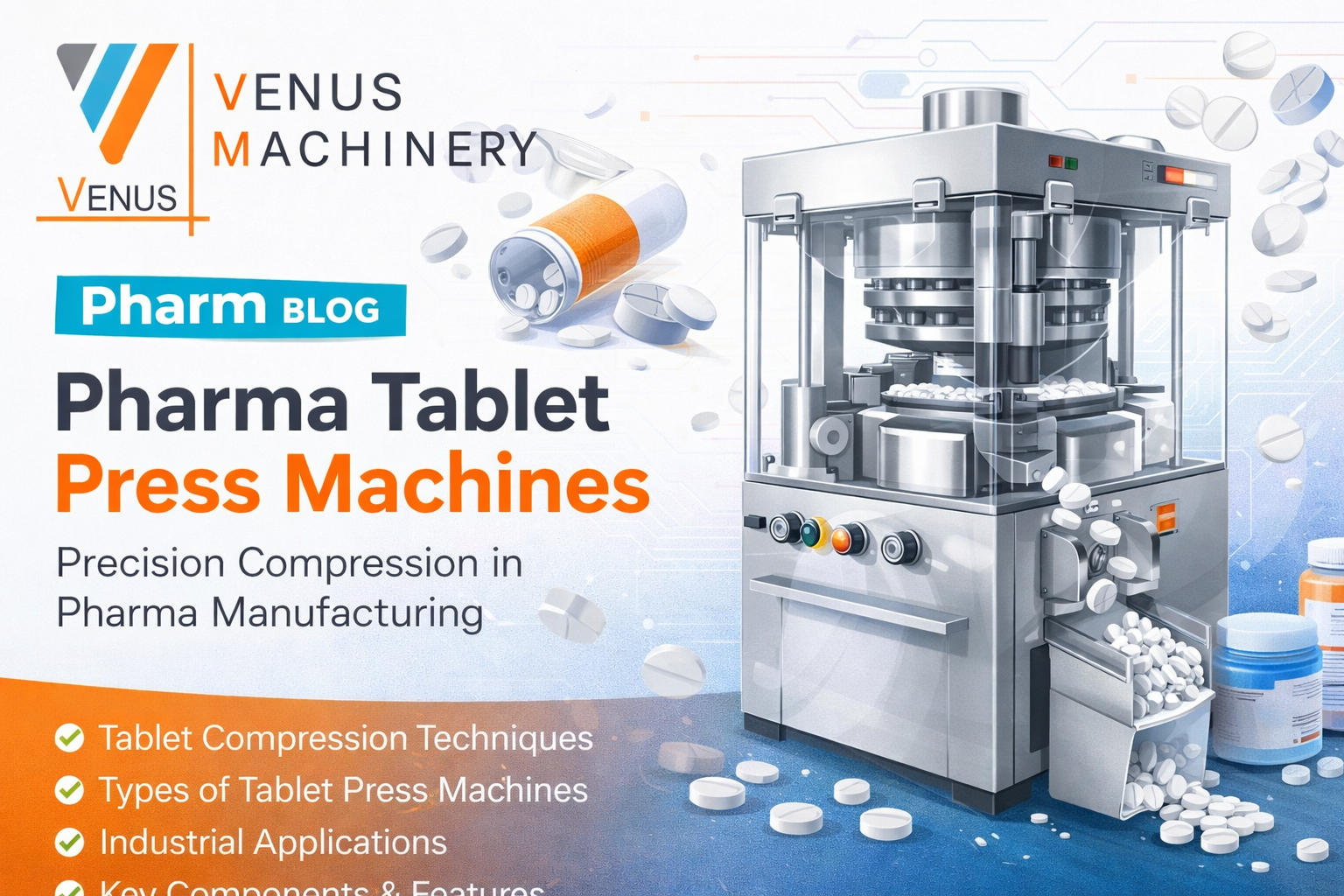
Pharma
Tablet Press
Pharmaceutical tablet production requires precision, consistency, and strict control over dosage accuracy. A pharma tablet press plays a central role in modern pharmaceutical manufacturing by converting powdered or granulated formulations into solid tablets with controlled weight, hardness, and uniformity.
These machines are widely used in pharmaceutical plants, research laboratories, formulation development centers, and contract manufacturing facilities where reliable tablet compression is essential.
A pharma tablet press is engineered to apply controlled compression force to pharmaceutical formulations placed inside die cavities. This compression process ensures that each tablet maintains the required structural integrity while preserving the chemical composition of the formulation. Because tablets are among the most widely used dosage forms in the pharmaceutical industry, tablet press machines are essential for maintaining consistent production quality.
Understanding the Role of Pharma Tablet Press Machines in Pharmaceutical Manufacturing
Pharma tablet press machines serve as the primary equipment responsible for converting pharmaceutical powders or granules into compressed tablets. The compression process ensures that the final product meets regulatory requirements for dosage accuracy, hardness, weight consistency, and dissolution performance.
Tablet compression is a critical stage in the pharmaceutical production cycle because variations during compression can directly affect the final product quality. Pharmaceutical manufacturers rely on tablet press systems that provide accurate compression control, stable operating speeds, and consistent tablet output across large manufacturing batches.
These machines are commonly used to produce a wide range of pharmaceutical products, including prescription medicines, over-the-counter drugs, nutraceutical tablets, and dietary supplements. Their design ensures that tablet formulations retain their intended therapeutic effectiveness while remaining stable during storage and transportation.
Working Principle of Pharma Tablet Press Machines
A pharma tablet press machine operates through a mechanical compression process that converts pharmaceutical powder or granules into tablets using upper and lower punches positioned within a die cavity. The process is designed to ensure accuracy and repeatability throughout continuous production cycles.
The tablet compression process generally involves several sequential stages:
- Granules or powder are fed into the die cavity through a feeder system
- The lower punch regulates the fill depth of the material inside the die
- The upper punch moves downward to compress the material under controlled pressure
- Compression force forms a solid tablet with a defined shape and thickness
- The upper punch retracts while the lower punch rises to eject the tablet
- The finished tablet is discharged and transferred to collection or inspection systems
This controlled mechanical process enables pharmaceutical manufacturers to maintain consistent tablet quality across thousands or even millions of tablets produced during a single production cycle.
Key Components of Pharma Tablet Press Machines
Pharmaceutical tablet press machines consist of several mechanical and control components that work together to achieve precise tablet compression. Each component contributes to the stability and efficiency of the tablet manufacturing process.
Major components typically include:
- Hopper system for feeding granules or powder
- Die table where tablet compression takes place
- Upper and lower punches that apply compression force
- Turret system that rotates the die and punch assembly
- Compression rollers that regulate compression pressure
- Ejection system that removes finished tablets from the die
- Control panel for monitoring operational parameters
These integrated components help maintain accurate compression control and support consistent tablet production in accordance with pharmaceutical industry standards.
Types of Pharma Tablet Press Machines
Different pharmaceutical manufacturing environments require tablet press machines designed for various production capacities and operational needs. Tablet press equipment is therefore available in multiple configurations depending on the scale of production and the application requirements.
Common types of pharma tablet press machines include:
- Single punch tablet press machines used for small batch production and laboratory testing
- Mini rotary tablet press machines designed for research and development applications
- Multi-station rotary tablet press machines used for medium-scale pharmaceutical production
- High-speed rotary tablet press machines used in large pharmaceutical manufacturing facilities
Each machine type offers different levels of output capacity, compression force, and automation to meet specific pharmaceutical production requirements.
Key Features of Modern Pharma Tablet Press Equipment
Modern pharmaceutical tablet press machines incorporate advanced design features that improve compression accuracy, machine stability, and operational efficiency. These features help manufacturers achieve consistent tablet quality while maintaining reliable production performance.
Important features commonly included in modern tablet press machines include:
- Precision compression control for uniform tablet hardness
- Adjustable fill depth for accurate dosage control
- Variable speed operation for flexible production capacity
- Stainless steel contact parts for hygienic pharmaceutical processing
- Transparent safety guards for monitoring machine operation
- Compatibility with multiple tooling configurations
- Stable center-drive mechanisms for smooth machine performance
These design elements enable pharmaceutical manufacturers to maintain strict process control while producing tablets in different shapes, sizes, and formulations.
Industrial Applications of Pharma Tablet Press Machines
Pharma tablet press equipment is widely used across multiple sectors within the pharmaceutical and healthcare industries. Its ability to produce uniform tablets efficiently makes it essential for a wide range of manufacturing operations.
Common application areas include:
- Pharmaceutical drug manufacturing facilities
- Nutraceutical and dietary supplement production units
- Pharmaceutical research and development laboratories
- Pharmacy colleges and formulation testing centers
- Contract pharmaceutical manufacturing companies
- Herbal and ayurvedic tablet production plants
The versatility of tablet press machines allows manufacturers to process various formulations while maintaining consistent production output.
Factors to Consider When Selecting a Pharma Tablet Press
Selecting the right pharma tablet press machine requires careful evaluation of manufacturing requirements, production capacity, and formulation characteristics. Pharmaceutical manufacturers typically assess several operational factors before choosing a suitable system.
Important considerations include machine output capacity, compatibility with tooling standards, compression force control, ease of cleaning, and accessibility for maintenance. Production scale also plays a significant role, as laboratory testing equipment differs substantially from high-volume industrial tablet press systems.
Material compatibility is another important factor because pharmaceutical equipment must comply with strict hygienic manufacturing requirements. Stainless steel construction and smooth surface finishes help ensure that tablet press machines meet pharmaceutical cleanliness standards.
Maintenance and Operational Reliability of Tablet Press Machines
Reliable performance is essential for pharmaceutical production equipment because manufacturing interruptions can affect production schedules and product availability. Tablet press machines are therefore designed with durable mechanical structures and precise control systems to support continuous operation.
Routine maintenance is critical for maintaining machine reliability. Regular inspection of punches, dies, compression rollers, and feeding systems helps prevent operational issues during production. Proper cleaning procedures are also necessary to prevent cross-contamination between different pharmaceutical formulations.
Manufacturers typically implement preventive maintenance schedules to ensure that tablet press equipment continues to operate efficiently during extended production cycles.
Future Developments in Pharma Tablet Press Technology
Advancements in pharmaceutical manufacturing technology continue to improve the performance and capabilities of tablet press machines. Modern equipment increasingly incorporates automation, digital monitoring systems, and enhanced compression control technologies to support efficient manufacturing operations.
Automated monitoring systems allow operators to track tablet weight, compression force, and production output in real time. This helps maintain consistent tablet quality while reducing process variations during manufacturing.
Future developments are expected to further improve production efficiency, reduce downtime, and enhance the ability of tablet press machines to handle complex pharmaceutical formulations.
Frequently Asked Questions
A pharma tablet press machine is used to compress pharmaceutical powders or granules into solid tablets with controlled dosage, shape, and hardness. These machines are essential in pharmaceutical manufacturing for producing consistent tablet formulations.
A tablet press machine works by filling pharmaceutical granules into a die cavity and compressing them using upper and lower punches. The applied pressure forms the granules into solid tablets that are then ejected from the die.
Pharmaceutical manufacturing commonly uses single punch tablet presses, mini rotary tablet press machines, multi-station rotary presses, and high-speed tablet press machines depending on production requirements.
Compression control ensures that tablets maintain uniform hardness, weight consistency, and structural integrity. Proper compression prevents tablet breakage and helps ensure correct dissolution properties during pharmaceutical use.
Tablet press machines are widely used in pharmaceutical manufacturing plants, nutraceutical production units, research laboratories, formulation development centers, and pharmaceutical education institutions.
Pharmaceutical tablet press machines are typically manufactured using stainless steel components to maintain hygienic conditions and ensure compliance with pharmaceutical manufacturing standards.
Our Blogs
- Pharma Tablet Press
- High Speed Tablet Press Machine
- Pharmaceutical Tablet Machine Manufacturer in India
- Tablet Dedusting Machine Supplier in India
- Tablet Machine Supplier in Ahmedabad
- GMP Roll Compactor Machine
- Pharmaceutical Dry Granulation Machine
- Slugging Free Dry Granulation System
- Roll Compactor Machine Manufacturer in Gujarat
- Roll Compactor Supplier in India
- Single Rotary Tablet Pressing Machine Manufacturers
- Single Rotary Tablet Pressing Machine
- Double Rotary Tablet Pressing Machine in Gujarat
- Double Rotary Tablet Pressing Machine in Ahmedabad
- Double Rotary Tablet Pressing Machine Suppliers
- Double Rotary Tablet Pressing Machine Manufacturers
- Double Rotary Tablet Pressing Machine
- Coating Pan in Gujarat
- Coating Pan Suppliers
- Coating Pan Manufacturers
- Coating Pan in Ahmedabad
- Sugar Coating Machine in Gujarat
- Sugar Coating Machine in Ahmedabad
- Sugar Coating Machine Suppliers
- Sugar Coating Machine Manufacturers
- Sugar Coating Machine in Gujarat
- Syrup Making Machine in Ahmedabad
- Syrup Making Machine Suppliers
- Syrup Making Machine Manufacturers
- Syrup Making Machine in Gujarat
- Fluid Bed Process in Gujarat
- Fluid Bed Process in Ahmedabad
- Fluid Bed Process Suppliers
- Fluid Bed Process Manufacturers
- Fluid Bed Process
- Stainless Steel in Gujarat
- Stainless Steel in Gujarat
- Stainless Steel in Ahmedabad
- Stainless Steel Suppliers
- Stainless Steel Manufacturers
- Stainless Steel
- Tilting Paste Kettle in Gujarat
- Tilting Paste Kettle in Ahmedabad
- Tilting Paste Kettle Suppliers
- Tilting Paste Kettle Manufacturers
- Tilting Paste Kettle
- Pharmaceutical Press Machine in Gujarat
- Pharmaceutical Press Machine in Ahmedabad
- Pharmaceutical Press Machine Suppliers
- Pharmaceutical Press Machine Manufacturers
- Pharmaceutical Press Machine
- Rotary Tablet Press Machine in Gujarat
- Rotary Tablet Press Machine in Ahmedabad
- Rotary Tablet Press Machine Suppliers
- Rotary Tablet Press Machine Manufacturers
- Rotary Tablet Press Machine
- Vibro Sifter in Gujarat
- Vibro Sifter in Ahmedabad
- Vibro Sifter Suppliers
- Vibro Sifter Manufacturers
- Vibro Sifter
- Powder Mixers in Gujarat
- Powder Mixers in Ahmedabad
- Powder Mixers Suppliers
- Powder Mixers Manufacturers
- Powder Mixers
- Cone Blenders in Gujarat
- Cone Blenders in Ahmedabad
- Cone Blenders Suppliers
- Cone Blenders Manufacturers
- Cone Blenders
- Octagonal Blender in Gujarat
- Octagonal Blender in Ahmedabad
- Octagonal Blender Suppliers
- Octagonal Blender Manufacturers
- Octagonal Blender
- Mass Mixer in Gujarat
- Mass Mixer in Ahmedabad
- Mass Mixer Suppliers
- Mass Mixer
- Oscillating Granulator in Gujarat
- Mass Mixer Manufacturers
- Oscillating Granulator in Ahmedabad
- Oscillating Granulator Suppliers
- Oscillating Granulator Manufacturers
- Oscillating Granulator
- Rotary Vacuum Dryer in Gujarat
- Rotary Vacuum Dryer in Ahmedabad
- Rotary Vacuum Dryer Suppliers
- Rotary Vacuum Dryer Manufacturers
- Rotary Vacuum Dryer
- Vacuum Tray Dryer in Gujarat
- Vacuum Tray Dryer in Ahmedabad
- Vacuum Tray Dryer Suppliers
- Vacuum Tray Dryer Manufacturers
- Vacuum Tray Dryer
- Pharmaceutical Machine in Gujarat
- Pharmaceutical Machine in Ahmedabad
- Pharmaceutical Machine Suppliers
- Pharmaceutical Machine Manufacturers
- Pharmaceutical Machine
- Ointment Manufacturing Plant in Gujarat
- Ointment Manufacturing Plant in Ahmedabad
- Ointment Manufacturing Plant Suppliers
- Ointment Manufacturing Plant Manufacturers
- Ointment Manufacturing Plant
- Liquid Oral Manufacturing Plant in Gujarat
- Liquid Oral Manufacturing Plant in Ahmedabad
- Liquid Oral Manufacturing Plant Suppliers
- Liquid Oral Manufacturing Plant Manufacturers
- Liquid Oral Manufacturing Plant
- Vibro Sifter Machine in Gujarat
- Vibro Sifter Machine in Ahmedabad
- Vibro Sifter Machine Suppliers
- Vibro Sifter Machine Manufacturers
- Vibro Sifter Machine
- Tray Dryer in Gujarat
- Tray Dryer in Ahmedabad
- Tray Dryer Suppliers
- Tray Dryer Manufacturers
- Tray Dryer
- 16 St Rotary Tablet Press Machine in Gujarat
- 16 St Rotary Tablet Press Machine in Ahmedabad
- 16 St Rotary Tablet Press Machine Suppliers
- 16 St Rotary Tablet Press Machine Manufacturers
- 16 St Rotary Tablet Press Machine
- Mixer Grinder in Gujarat
- Mixer Grinder in Ahmedabad
- Mixer Grinder Suppliers
- Mixer Grinder Manufacturers
- Mixer Grinder
- Rapid Mixer Granulator in Gujarat
- Rapid Mixer Granulator in Ahmedabad
- Rapid Mixer Granulator Suppliers
- Rapid Mixer Granulator Manufacturers
- Rapid Mixer Granulator
- Colloid Mill in Gujarat
- Colloid Mill in Ahmedabad
- Colloid Mill Suppliers
- Colloid Mill Manufacturers
- Colloid Mill
- Double Cone Blender in Gujarat
- Double Cone Blender in Ahmedabad
- Double Cone Blender Manufacturers
- Double Cone Blender
- Pharmacy Equipment in Gujarat
- Pharmacy Equipment in Ahmedabad
- Pharmacy Equipment Suppliers
- Pharmacy Equipment Manufacturers
- Pharmacy Equipment
- Roll Compactor in Gujarat
- Roll Compactor in Ahmedabad
- Roll Compactor Suppliers
- Roll Compactor Manufacturers
- Roll Compactor
- Tablet Coating Machine in Gujarat
- Tablet Coating Machine in Ahmedabad
- Tablet Coating Machine Suppliers
- Tablet Coating Machine Manufacturers
- Tablet Coating Machine
- Tablet Making Machine in Gujarat
- Tablet Making Machine in Ahmedabad
- Tablet Making Machine Suppliers
- Tablet Making Machine Manufacturers
- Tablet Making Machine
- Fluid Bed Dryer Machine in Gujarat
- Fluid Bed Dryer Machine in Ahmedabad
- Fluid Bed Dryer Machine Suppliers
- Fluid Bed Dryer Machine Manufacturers
- Fluid Bed Dryer Machine
- Blister Packing Machine in Gujarat
- Blister Packing Machine in Ahmedabad
- Blister Packing Machine Suppliers
- Blister Packing Machine Manufacturers
- Blister Packing Machine in Gujarat
- Multi Mill Machine in Gujarat
- Multi Mill Machine in Ahmedabad
- Multi Mill Machine Suppliers in India
- Multi Mill Machine Manufacturers
- Multi Mill Machine Manufacturer
- Mass Mixer Machine
- Ribbon Blender Machine in Gujarat
- Ribbon Blender Machine in Ahmedabad – Venus Machinery
- Ribbon Blender Machine Suppliers in Gujarat
- Ribbon Blender Machine Manufacturer in Gujarat
- Ribbon Blender Machine
- Tablet Press Machine in Gujarat
- Tablet Press Machine in Ahmedabad
- Tablet Press Machine Suppliers
- Tablet Press Machine Manufacturers
- Tablet Press Machine
- Tablet Making Machine in Gujarat
- Tablet Making Machine in Ahmedabad
- Tablet Making Machine Suppliers
- Tablet Making Machine Manufacturers
- Tablet Making Machine
- GMP Certified Deburring and Dedusting Machine Manufacturer
- Deburring Machine for Pharmaceutical Tablets India
- Tablet Deburring and Dedusting Equipment Supplier Gujarat
- High-Speed Dedusting Machine Manufacturer Ahmedabad
- Automatic Deburring and Dedusting Machine in India
- Tablet Dedusting Machine Supplier in Gujarat
- Pharmaceutical Deburring Machine Manufacturer Ahmedabad
- Deburring and Dedusting Machine Supplier in Gujarat
- Deburring and Dedusting Machine Manufacturer in Ahmedabad
- Pharma Equipment Manufacturer in Ahmedabad
- Oscillating Granulator Machine Price in India
- Tablet Granulation Machine Manufacturer Gujarat
- Oscillating Granulator Equipment Supplier India
- Best Oscillating Granulator Manufacturer in Gujarat
- Fluid Bed Drying Machine Exporter India
- High‑Speed Oscillating Granulator in India
- Granulation Machine Supplier in Ahmedabad
- Industrial Oscillating Granulator Machine Gujarat
- SS Oscillating Granulator Exporter from Ahmedabad
- Pharmaceutical Oscillating Granulator Manufacturer India
- Oscillating Granulator Machine Supplier in Gujarat
- Oscillating Granulator Machine Manufacturer in Ahmedabad
- Fluid Bed Dryer Machine Manufacturer Ahmedabad
- ISI Certified Compression Machine Supplier India
- Compression Machine Dealer in Gujarat
- Compression Machine Manufacturer near Me Ahmedabad
- Fluid Bed Dryer Supplier in Gujarat
- High‑Efficiency Fluid Bed Dryer Gujarat
- High-Efficiency Fluid Bed Dryer Gujarat
- Fluid Bed Dryer Exporter from Ahmedabad
- SS Fluid Bed Dryer Manufacturer
- Fluid Bed Dryer for Pharma Industry
- GMP Fluid Bed Dryer Manufacturer in Ahmedabad
- Heavy-Duty Compression Machine Supplier in Gujarat
- Compression Machine for Concrete Testing in India
- Automatic Compression Testing Machine (CTM)
- Digital Compression Testing Machine
- Best Compression Testing Machine Supplier in India
- Top Compression Machine Manufacturer in Gujarat
- Compression Machine Exporters from Ahmedabad
- Compression Testing Machine Manufacturer in India
- Hydraulic Compression Machine Manufacturer in Ahmedabad
- Deburring and Dedusting Machine Manufacturer in India
- Lab Testing Compression Machine Ahmedabad
- Fluid Bed Dryer for Powder Drying in India
- Leading Compression Machine Manufacturer in Ahmedabad
- Top Fluid Bed Dryer Manufacturer in India
- Leading GMP Oscillating Granulator Machine Manufacturer
- Pharmaceutical Fluid Bed Dryer Manufacturer
- Stainless Steel Oscillating Granulator – Ahmedabad
- Fluidized Bed Dryer Supplier Gujarat
- Industrial Fluid Bed Dryer in Ahmedabad
- Oscillating Granulator for Pharma Industry
- Fluid Bed Processor Supplier in India
- SS Oscillating Granulator Exporter from Ahmedabad
- Fluid Bed Dryer Manufacturer in Ahmedabad
- Dust Extractor Machine Supplier
- Roll Compactor Manufacturers
- Ribbon Blender Manufacturer in Ahmedabad
- Electric Roll Compactor Machine Manufacturer in India
- Roller Compactor Machine for Pharmaceutical Industry
- Vibro Sifter Manufacturer in Mumbai
- Vibro Sifter Manufacturer in Ahmedabad
- Sintex Water Tank Manufacturer
- Vectus Water Tank Price 1000 Ltr
- 500 Litre Liquid Storage Tank Manufacturer
- Vibro Sifter Machine Manufacturer in India
- Liquid Storage Tank Manufacturer near Naroda, Ahmedabad
- Oscillating Granulator Machine Manufacturer
- Liquid Storage Tank Manufacturer near Ahmedabad, Gujarat
- Industrial Vibro Sifter Machine Manufacturer
- Horizontal Drive Manufacturer
- Vibro Sifter Working Principle
- Vibro Sifter Manufacturer in India
- Industrial Multi Mill Machine
- Multi Mill Machine Manufacturers
- Dust Extractor Machine Manufacturers
- Mass Mixer Machine Manufacturers
- Rapid Mixer Granulator (RMG) Sensors
- Double Cone Blender Manufacturers in India
- Colloid Mill Machine Manufacturers in Maharashtra
- Rapid Mixer Granulator (RMG) – Capacity Guide
- Colloid Mill Machine Manufacturers in India
- Rapid Mixer Granulator principal (RMG)
- Roll Compactor Machine Manufacturer in Ahmedabad
- Rapid Mixer Granulator (RMG)
- Industrial Roll Compactor Machine Manufacturer Solutions
- Roll Compactor Manufacturers in India
- Double Cone Blender Construction
- Small Roll Compactor Machine Manufacturer in India
- Roll Compactor Manufacturers in India
- Double Cone Blender – Pharmaceutical
- Double Cone Blender Manufacturer Near Me
- Ribbon Blender
- Cone Blender
- Octagonal Blender
- Camphor Machine
- Compression Machine
- Deburring and Dedusting Machine
- Tablet Machine
- Roll Compactor Machine
